Kitchen remodel financing in Tacoma comes down to six main paths: paying with savings, a home equity loan, a HELOC, a cash out refinance, a personal loan, or a contractor financing plan, and for select projects, a government backed loan like an FHA 203(k) or FHA Title I loan. Which one fits you best depends on how much equity you have in your home, your credit profile, your timeline, and how large your project actually is. Below is a full breakdown of each option, plus a few Tacoma specific resources most guides never mention, so you can walk into your remodel with a funding plan instead of a guess.
Why Financing Matters More in Tacoma Than You’d Think
A full kitchen remodel in Tacoma typically runs between $20,000 and $50,000, with high end custom projects climbing past $100,000. Very few homeowners have that sitting in a checking account, and even fewer want to drain their emergency fund to pay for cabinets and countertops. That’s where financing comes in. It lets you spread the cost out, keep your savings intact for actual emergencies, and start the project on your timeline instead of waiting years to save up. The trick is matching the financing type to your situation, because the wrong choice can quietly cost you thousands in extra interest.
Paying With Cash or Savings
This is still the cleanest option if you can do it without touching your emergency fund or retirement accounts. There’s no application, no interest, no monthly payment, and no lender involved in your project decisions. It tends to work best for smaller to mid sized updates like cabinet refacing, a countertop swap, or a backsplash and lighting refresh rather than a full gut remodel. If cash would leave you with little cushion for the surprises that older Tacoma homes love to hide behind walls (outdated wiring, old plumbing, subfloor issues), it’s worth pairing savings with a smaller loan rather than emptying your account completely.

Home Equity Loan
A home equity loan gives you a lump sum based on the equity you’ve built in your house, with a fixed interest rate and a fixed monthly payment for the life of the loan. Because the loan is secured by your home, rates are usually noticeably lower than personal loans or credit cards. This option makes sense if you already know your total project cost, have solid equity (most lenders want at least 15 to 20 percent remaining after the loan), and want predictable payments you can plan around. The tradeoff is that your home is collateral, so missed payments carry real risk, and approval can take a few weeks due to appraisal and underwriting.
Home Equity Line of Credit (HELOC)
A HELOC works more like a credit card tied to your home’s equity. You get approved for a credit line and only draw what you need, when you need it, which is genuinely useful for kitchen remodels costs can shift once demolition uncovers something unexpected. Interest is charged only on what you borrow, and many HELOCs have a variable rate, which means your payment can rise if rates increase. This tends to fit homeowners doing a phased remodel, or anyone who wants flexibility rather than locking into one lump sum on day one.
Cash Out Refinance
If mortgage rates have dropped since you bought your home, or if your home’s value has risen significantly (which has happened across a lot of Pierce County neighborhoods in recent years), a cash out refinance can be worth exploring. You replace your existing mortgage with a new, larger one and pocket the difference to fund your remodel. This resets your mortgage term and comes with closing costs, so it generally makes the most sense when the new rate is close to or better than your current one, and when you plan to stay in the home long enough for the numbers to work in your favor.
Personal Loan
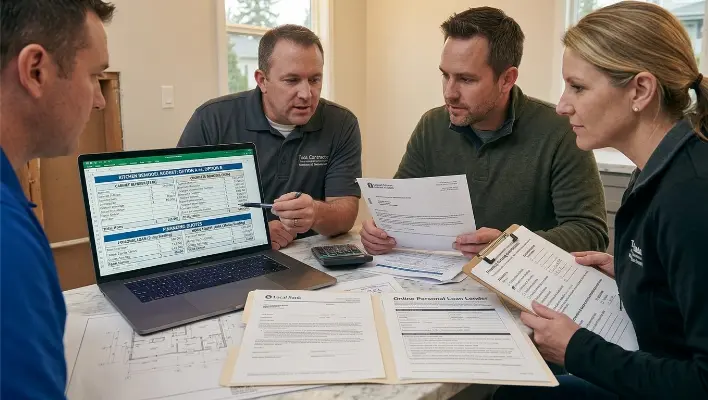
Personal loans are unsecured, meaning your home isn’t used as collateral, and funding is often available within a few business days. You don’t need equity to qualify, which makes this a solid choice for newer Tacoma homeowners who haven’t built up equity yet, or for anyone who simply doesn’t want to attach their remodel debt to their house. Interest rates are typically higher than home equity products since the lender is taking on more risk, so this option fits best for small to mid range projects rather than a full scale renovation.
Contractor & Retailer Financing
Some kitchen remodeling companies and cabinet or appliance retailers offer financing through a third party lender, often advertised as promotional plans like several months of no interest. These can genuinely save you money if you pay the balance off before the promotional window closes. The detail a lot of homeowners miss is that many of these are deferred interest offers, not true zero percent loans. If any balance remains when the promotional period ends, interest can be charged retroactively on the full original amount. Read the terms closely, ask your contractor to explain them in plain language, and only use this route if you’re confident you can pay it off on time.
FHA Title I and FHA 203(k) Loans
These are federally backed loan programs designed specifically for home improvements, and they can be a strong fit for homeowners who don’t have significant equity or who have a more limited credit history. An FHA Title I loan is meant for smaller to moderate home improvement costs and has more flexible qualification requirements than a conventional loan. An FHA 203(k) loan is more involved and typically used when you’re purchasing or refinancing a home that needs renovation, letting you roll the purchase and remodel costs into one mortgage. These programs require more documentation and a licensed contractor, but they open the door for buyers of older Tacoma homes who want to remodel the kitchen as part of the purchase itself.
Local Tacoma and Pierce County Resources Worth Checking
Before locking in a national loan product, it’s worth checking what’s available closer to home. Tacoma Public Utilities offers rebate and, in some cases, loan programs for energy efficient home upgrades, which can apply if your kitchen remodel includes new appliances, insulation, or electrical work. The Washington State Housing Finance Commission also runs low interest home improvement loan programs for qualifying homeowners in Pierce County, aimed largely at essential repairs and efficiency upgrades. Local credit unions serving the South Sound area, including options like Sound Credit Union, TAPCO Credit Union, WSECU, and Harborstone Credit Union, frequently offer home equity products and personal loans with member focused rates that are worth comparing against big national lenders. None of these replace the core financing options above, but they can shave real money off your total cost if your project qualifies.
How to Choose the Right Kitchen Remodel Financing Option in Tacoma
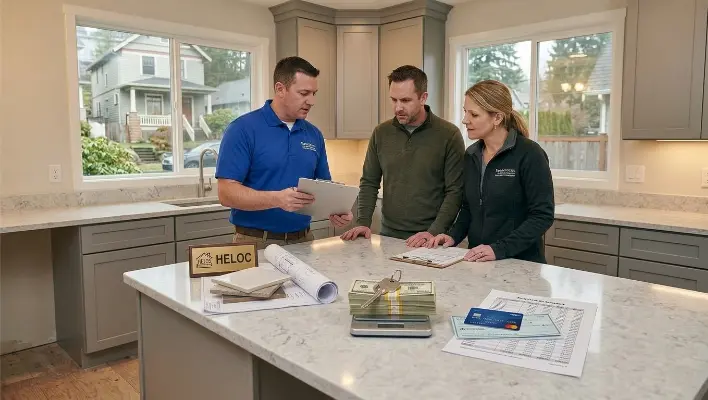
Start with three questions. First, how much equity do you have in your home, since that alone rules certain products in or out. Second, how large is your project, because a $12,000 cabinet refresh and a $65,000 full remodel call for very different financing tools. Third, how soon do you need the money, since personal loans fund in days while home equity products can take weeks. Once you’ve answered those, get quotes from more than one lender type rather than accepting the first offer. A local kitchen remodeling contractor who’s been through this with hundreds of Tacoma homeowners can also help you sanity check your budget before you commit to any loan amount, so you’re financing an accurate number instead of a guess.
Frequently Asked Questions
What is the best way to finance a kitchen remodel in Tacoma?
There’s no single best option for everyone. Homeowners with strong equity and a defined budget often do well with a home equity loan or HELOC because of the lower rates. Homeowners without much equity, or who want faster funding without putting their home up as collateral, often lean toward a personal loan instead.
Can I finance a kitchen remodel with bad credit?
Yes, though your options narrow. Home equity loans remain accessible to homeowners with imperfect credit because the loan is backed by the property itself. FHA Title I loans also have more flexible credit requirements than conventional financing, and some lenders specialize in home improvement loans for borrowers outside typical credit ranges.
Do I need a permit before I can get remodel financing?
Not to apply for the loan itself, but most renovation specific loan programs, including FHA products, require the work to be done by a licensed contractor and to meet local building codes. Pierce County and the City of Tacoma both require permits for kitchen projects involving plumbing, electrical, or structural changes, so plan for that regardless of how you finance the project.
How much kitchen remodel financing can I actually qualify for?
That depends on your income, credit profile, existing debt, and, for equity based products, how much value you’ve built up in your home. A rough industry guideline is to avoid spending more than 30 percent of your home’s value on a kitchen remodel, since overspending relative to comparable homes in your neighborhood can limit your return when you eventually sell.
Is contractor financing a good idea?
It can be, especially with a true promotional rate that you’re confident you can pay off in time. Just confirm whether the offer is deferred interest or genuine zero percent financing before signing, since those two structures can produce very different outcomes if any balance is left over.