When it comes to cabinet refacing vs full replacement, refacing saves more money almost every time, cutting your cabinet costs by roughly 40 to 60 percent compared to a full replacement, but that savings only holds up if your existing cabinet boxes are structurally sound and you’re happy with your current layout. If either of those things isn’t true, replacement often ends up being the smarter financial move, even though it costs more upfront. Here’s how the two options actually compare in the cabinet refacing vs full replacement decision for a Tacoma kitchen.
What Cabinet Refacing Actually Involves
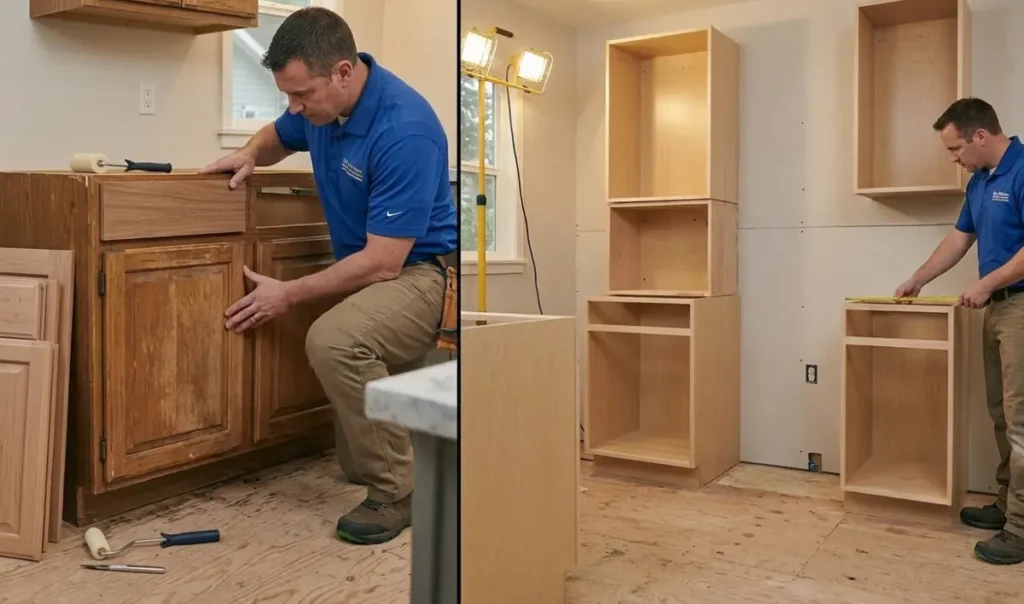
Refacing means keeping your existing cabinet boxes exactly where they are and replacing everything you see and touch: new doors, new drawer fronts, fresh veneer on the exposed sides, and new hardware. The framework stays put, which is why the job takes days instead of weeks.
For a lot of Tacoma homeowners, this is the appealing part. You get a kitchen that looks brand new without tearing your house apart or living out of a microwave for two months.
What Full Cabinet Replacement Actually Involves
Full replacement is a clean slate. Every cabinet box comes out, the walls get exposed, and new cabinetry goes in from scratch, whether that’s stock, semi custom, or fully custom built. This is the only route if you want to shift your layout, add an island, extend cabinets to the ceiling, or fix a kitchen that simply doesn’t work the way you cook.
Because it touches plumbing, electrical, flooring, and often countertops too, replacement pulls in more trades, more permits, and more time on the calendar.
Cabinet Refacing vs Full Replacement: Real Cost Numbers for a Tacoma Kitchen
Pricing varies by kitchen size and material choice, but here’s a realistic range based on typical Pierce County remodel budgets:
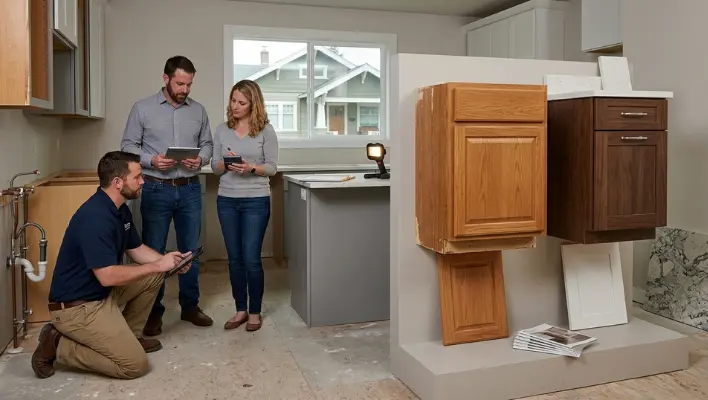
Cabinet refacing usually runs about $4,000 to $10,000 for an average size kitchen, or roughly $100 to $250 per linear foot depending on the veneer or door material you pick.
Full cabinet replacement typically lands between $15,000 and $40,000, and that number climbs fast once you add custom cabinetry, new countertops, or a layout change.
So on paper, refacing is the clear winner if you’re only comparing sticker price. The real question in the cabinet refacing vs full replacement comparison is whether that lower price actually holds up once you look past the invoice.
Why Cabinet Refacing Costs Less
The savings come from what refacing doesn’t require:
No demolition labor. Nobody has to rip out and haul away your old boxes, which cuts labor hours significantly.
No structural rework. Since the boxes stay in place, there’s no need to touch drywall, flooring, or electrical behind the cabinets.
Fewer trades involved. A refacing project is mostly carpentry and finish work. A full replacement often needs a plumber, electrician, and flooring crew coordinated around the cabinet install.
Shorter project window. Less time on site means lower total labor cost, even at the same hourly rate.
When Full Replacement Actually Saves You Money in the Long Run
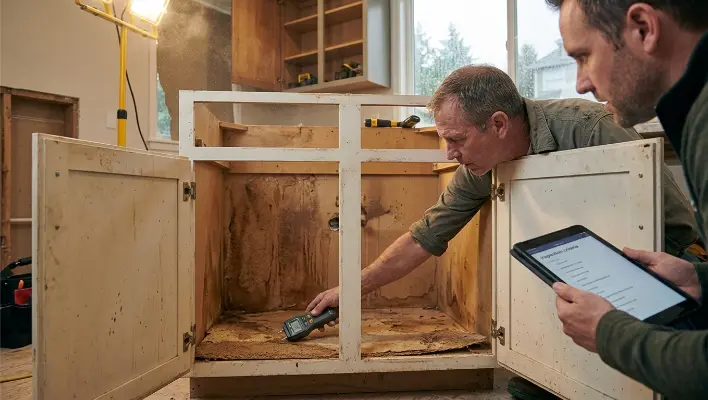
This is the part a lot of cabinet refacing vs full replacement cost comparisons skip. Refacing only saves money if it solves your actual problem. If your cabinet boxes have water damage, warping, soft spots, or mold (which shows up more than people expect in older Tacoma homes given our wet winters and the humidity coming off the Sound), refacing is putting a new face on a structure that’s already failing. You’ll pay for the reface now and pay again for replacement in a few years.
The same logic applies to layout. If your kitchen has poor traffic flow, not enough storage, or an awkward footprint that makes cooking harder than it should be, refacing locks that problem in permanently. You’ll have new doors on the same bad layout. Replacement lets you fix the actual issue once instead of dressing it up and revisiting it later.
Timeline Differences and What That’s Worth to You
Refacing typically wraps up in three to five days. Full replacement usually takes anywhere from three to eight weeks, sometimes longer if custom cabinets are on backorder or your project needs multiple inspections.
That time gap matters more than people think. Every week without a working kitchen has a real cost, whether that’s eating out, disrupting a family’s routine, or simply living with dust and noise in your home. For homeowners on a tight schedule, refacing’s speed is part of its financial appeal, not just a convenience.
How Tacoma’s Climate Factors Into the Refacing vs Replacement Decision
Our Pacific Northwest weather isn’t kind to cabinetry that’s been neglected. Persistent rain, higher indoor humidity in older homes, and older plumbing lines under sinks all increase the odds of moisture damage inside cabinet boxes, especially under the sink and along exterior walls. Before deciding to reface, it’s worth having a contractor physically check the boxes, not just the doors, particularly in homes built before the 1990s in neighborhoods like the North End, Proctor, or South Tacoma. A box that looks fine from the outside can be soft or delaminating on the inside.
Cabinet Refacing vs Full Replacement: Return on Investment
Refacing tends to return a higher percentage of what you spend, often in the range of 60 to 80 percent at resale, because the upfront investment is smaller relative to the visual improvement. Full replacement generally recoups somewhat less as a percentage, closer to 55 to 75 percent, but because the total project is larger, the actual dollar value returned is usually higher.
In other words, refacing is the better percentage play. Replacement is the better dollar play, especially if your kitchen was genuinely outdated or dysfunctional before the remodel.
A Simple Way to Decide Between Cabinet Refacing and Full Replacement
Ask yourself these questions before choosing:
- Are the cabinet boxes solid, dry, and free of damage when you open the doors and check the corners?
- Do you actually like your current layout, or have you been wishing for more counter space, a different sink location, or an island?
- Is your main goal a fresh look, or are you also trying to fix storage and workflow problems?
- How soon do you need a functioning kitchen back?
If your answers lean toward solid boxes, a layout you like, and a desire for a quick visual refresh, refacing is almost certainly your money saver. If you’re dealing with damage, a layout that’s never worked, or a kitchen that needs to function completely differently, replacement is the option that actually saves you from paying twice.
Frequently Asked Questions
Is cabinet refacing cheaper than replacement?
Yes. Refacing costs roughly 40 to 60 percent less than full replacement in most cases, since it avoids demolition, structural work, and the need for multiple trades.
Can you reface cabinets that have water damage?
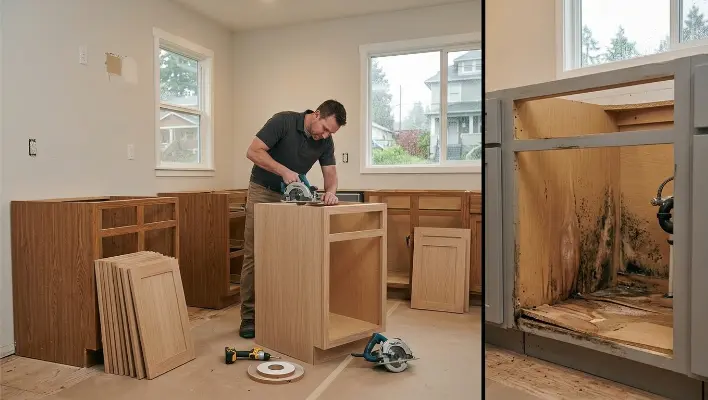
No. Refacing requires structurally sound boxes. If there’s water damage, warping, or mold, those specific cabinets need to be replaced, even if the rest of the kitchen is refaced.
How long does cabinet refacing take compared to replacement?
When comparing cabinet refacing vs full replacement timelines, refacing typically takes just three to five days since your existing cabinet boxes stay in place. Full replacement, on the other hand, usually takes three to eight weeks depending on cabinet type and project scope. This time difference is one of the biggest factors homeowners weigh when deciding between cabinet refacing and full replacement.
Does cabinet refacing increase home value?
Yes, refacing can recoup an estimated 60 to 80 percent of its cost at resale, making it one of the higher return kitchen upgrades available in Tacoma’s housing market.
Can I combine refacing and replacement in the same kitchen?
Yes. A hybrid approach lets you replace only the damaged or poorly placed cabinets while refacing the rest, which is often the most cost efficient path for kitchens that are mostly fine but have one or two problem areas.
The Bottom Line on Cabinet Refacing vs Full Replacement
For most Tacoma homeowners with solid cabinet boxes and a layout that already works, refacing is the clear way to save money while still getting a kitchen that looks completely new. But savings on paper aren’t the same as savings in practice. If your cabinets are hiding moisture damage or your layout has been fighting you for years, spending more now on replacement is what actually protects your budget down the road.
If you’re not sure which category your kitchen falls into, a quick in home evaluation is usually the fastest way to find out, and it’s worth doing before you commit to either option.Book a free estimate now.